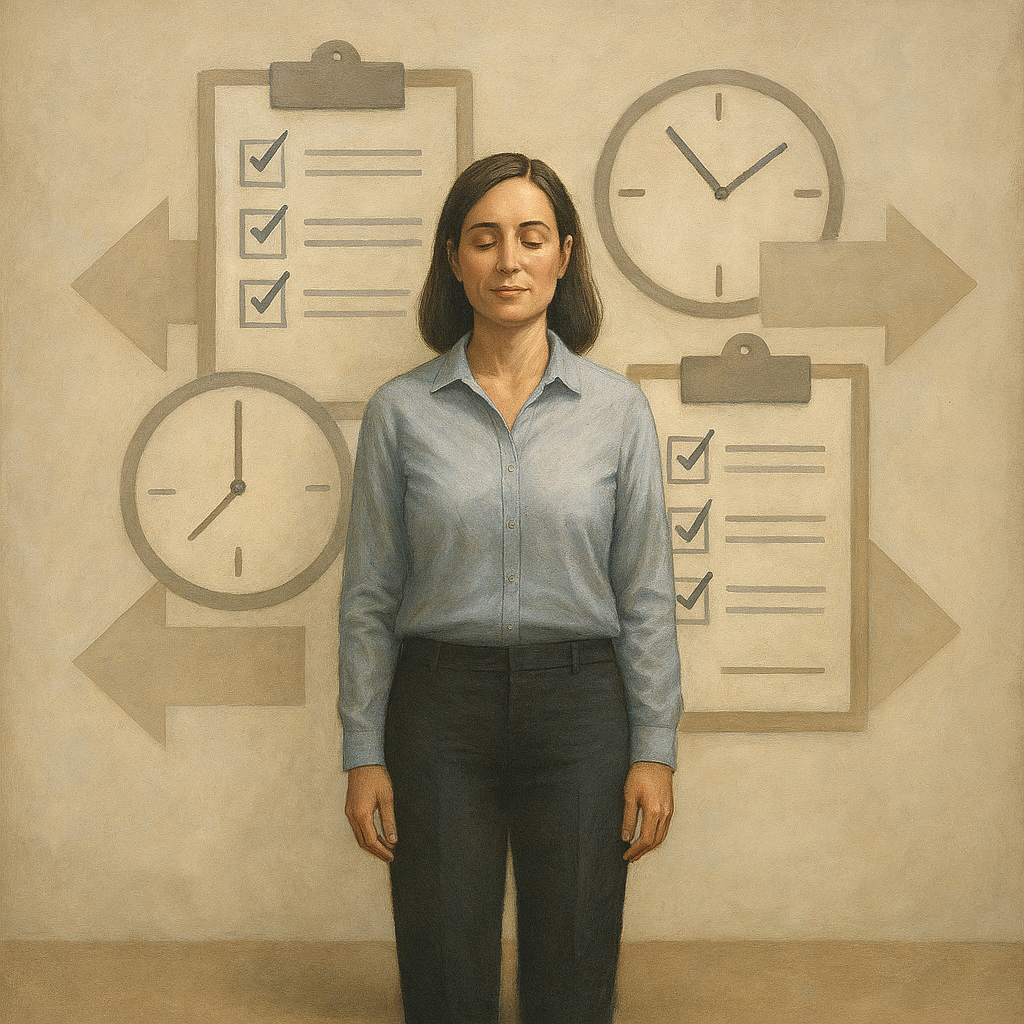
This Is Not Poverty: This Is Discrimination
Disability, Housing, and Civil Rights Failures in Maryland

Maryland brands itself as being a progressive, liberal state—one that claims to value equity, civil rights, and social justice. My lived experience tells an entirely different story.
I am an author, a single mother, a survivor of domestic violence, a mental wellness advocate, a behavioral health professional and the founder of a multi-service business supporting women and neurodivergent families. I have professional credentials, published work, community impact, and a documented history of advocacy and employment.
Yet despite this, I have been subjected to repeated discriminatory treatment, systemic neglect, and institutional harm by multiple Maryland state entities. That harm has directly contributed to housing instability, financial devastation, medical decline, and now a pending eviction that could have been avoided.
This is not poverty by choice. This is not irresponsibility. This is not a lack of effort.
This is state-sanctioned failure.
The Poverty Narrative I Do Not Fit—But Was Forced Into Anyway
There is a dangerous assumption embedded in many public systems: That people in crisis must be uneducated, unskilled, noncompliant, or undeserving.
I do not fit that stereotype and neither does my family.
I am highly educated, tech-literate, articulate, and documented at every step. I asked questions. I followed procedures. I advocated appropriately. And that advocacy itself became a liability.
In Maryland, once you are:
- a domestic violence or trauma survivor
- a disabled or neurodivergent parent
- a single mother
- someone challenging agencies
- someone with a complex legal matter
You become flagged and not protected.
Maryland Motor Vehicle Administration (MVA)
The MVA failed to provide adequate support or guidance during critical vehicle-related processes, despite knowing that my vehicle was essential for:
- employment as an RBT (Registered Behavior Technician)
- transporting disabled children
- medical care
- stability following an escape from domestic violence
This failure directly contributed to cascading losses, including job access, income and safety. Transportation in 2025 is not a luxury. It is a civil necessity.
Baltimore City Child Support Enforcement
This system failed to operate as a stabilizing force for my family when it was most needed. Delays and lack of legal intervention contributed to prolonged financial instability. This placed the burden of survival entirely on me while the systems created to enforce child support failed to act with urgency.
Child support is not a punitive tool; it is meant to protect children. When enforcement agencies refuse to prioritize cases involving already-marginalized parents, they further endorse instability and deepen inequity.
State & County Agencies (Housing, Social Services, Related Departments)
Despite extensive documentation, I encountered:
- delays that caused irreversible harm
- conflicting guidance that set me up to fail
- dismissal of advocacy as “noncompliance”
- punishment for asking for clarity and accountability
Each agency treated my case in isolation, while refusing to acknowledge how their combined failures created the crisis that they now refuse to remedy.
Maryland agencies tasked specifically with ending and preventing homelessness failed to intervene in a way that aligned with their stated mission. Support was reactive instead of preventative (arriving late, if at all) after damage had already been done.
Homelessness prevention requires timely action, coordination and trauma-informed decision-making. What I experienced was procedural indifference that treated housing loss as inevitable instead of preventable. When systems designed to stop homelessness wait until families are already collapsing, they are not preventing harm, they are simply managing fallout.
Housing stability should not depend on silence, passivity, or appearing “easy to manage.” When public housing systems penalize those who advocate or ask questions, they undermine the very populations they are meant to serve.
Maryland District Court System
The court system is meant to be a safeguard, not a weapon. Instead, I experienced:
- procedural rigidity without accommodation
- lack of trauma-informed consideration
- systemic indifference to documented hardship
- housing consequences that ignored causation and context
When courts ignore systemic contributors, they criminalize survival.
Disability Rights Organizations & Advocacy Groups
One of the most painful, yet ironic failures came from disability rights organizations themselves. I was turned away explicitly or implicitly because I could articulate my experience, advocate for myself, and present professionally. I was not perceived as “disabled enough.”
This reflects a deeply flawed and ableist standard that equates disability with visible impairment, silence, or incapacity. Neurodivergent individuals, trauma survivors, and those with invisible or stress-exacerbated disabilities are routinely excluded when they do not conform to stereotypes of helplessness.
Advocacy spaces that gatekeep support based on presentation rather than documented need perpetuate harm and erase entire communities. Articulation is not the absence of disability, but it is often a survival skill developed in response to systemic neglect.
The Human Cost of Institutional Neglect
The result of this mistreatment has been:
- prolonged emotional and psychological distress
- medical complications due to chronic stress
- loss of employment and income
- housing instability not caused by neglect, but by obstruction
- trauma compounded by systems meant to help, not hinder
I have spent days crying in frustration and fear, not because I lack resilience, but because no one should have to fight this hard just to exist in safety and peace.
This Is a Civil and Human Rights Issue
When systems:
- ignore disability and trauma
- retaliate against advocacy
- deny accommodations
- disproportionately destabilize marginalized families
That is not bureaucracy.
That is discrimination.
That is inhumane.
And it is unacceptable in any state, especially one that claims to lead with equity.
My Call to Maryland
This is not a plea for pity. This is a demand for accountability. I am calling on:
- the Maryland MVA
- the District Court system
- state and county agencies
- elected officials and oversight bodies
To review their actions, their policies, and the harm caused when systems prioritize procedure over people.
My family deserves protection instead of punishment. And so do countless others who never had the words, credentials, or energy left to speak.
I am speaking now because silence is no longer survivable.
When the System Decides You Are Disposable: A Maryland Accountability Request & Formal Complaint
To Whom It May Concern,
I am submitting this letter as a formal civil rights complaint and demand for immediate corrective action regarding discriminatory treatment, systemic neglect, and violations of federal and state law by multiple Maryland state and county entities.
This complaint invokes protections under, but not limited to:
- Title II of the Americans with Disabilities Act (ADA)
- Section 504 of the Rehabilitation Act
- The Fair Housing Act (42 U.S.C. §§ 3601–3619)
- The Civil Rights Act
- Applicable Maryland civil rights statutes
Complainant
I am a single mother, domestic violence survivor, neurodivergent individual, Registered Behavior Technician, author, speaker, and business owner. I am the sole caregiver of twice-exceptional (2e) children, requiring stability, safety, and continuity of care.
I do not fit the stereotype often assigned to families in crisis. I am educated, articulate, tech-literate, and well-documented. Advocacy and articulation do not negate disability, trauma, or civil rights protections.
Nature of the Complaint
Through the combined actions and inactions of multiple Maryland agencies, including but not limited to housing authorities, homelessness prevention services, the District Court system, the MVA, Child Support Enforcement, and affiliated state and county departments, I have been subjected to:
- Discriminatory denial of reasonable accommodations
- Failure to engage in interactive ADA processes
- Housing-related actions with devastating impact
- Retaliation and adverse treatment tied to advocacy
- Procedural rigidity that ignored documented disability, trauma, and domestic violence
- Systemic failures that directly caused loss of income, transportation, and housing stability
These failures did not occur in isolation. Their cumulative impact has placed my family at imminent risk of eviction, homelessness, and further trauma—despite my compliance, documentation, and repeated good-faith efforts to resolve issues.
ADA & Rehabilitation Act Violations
Under ADA Title II and Section 504, public entities are required to:
- Provide reasonable accommodations
- Modify policies and procedures when necessary
- Avoid discrimination based on disability, including invisible and neurodevelopmental disabilities
- Refrain from retaliation for asserting rights
I was repeatedly denied meaningful accommodations and treated as “noncompliant” or “undeserving” due to my ability to articulate and self-advocate—an ableist standard that directly violates federal law.
Articulation is not evidence of lack of disability. It is often a survival mechanism developed in response to systemic harm.
Fair Housing Act Violations
Actions and inactions by housing-related entities have:
- Failed to prevent a foreseeable housing crisis
- Ignored reasonable accommodation requests and context
- Created a disparate impact on a disabled, single-parent household
- Threatened to redline my family into unsafe or destabilizing environments
I explicitly refuse to be displaced, evicted, or forced into further trauma due to system-caused instability. Housing programs are required to prevent discrimination and not accelerate harm.
Civil Rights & Due Process Concerns
The treatment I have received reflects a broader pattern of discrimination against individuals who are:
- Disabled or neurodivergent
- Domestic violence survivors
- Single parents
- Actively advocating within public systems
- Involved in legal or administrative disputes
When advocacy becomes grounds for denial of support, civil rights are no longer protected—they are selectively applied.
Impact on Professional Life, Income, and Family Stability
The cumulative failures and discriminatory actions of Maryland state and county systems have caused direct and measurable harm to my professional life, income generation and family stability.
I am an established business owner, advocate, and mentor, and I have built my career in behavioral health as a Registered Behavior Technician (RBT)—a field that requires reliable transportation, physical access to clients, and consistency. The loss of my vehicle and subsequent instability, caused by systemic failures outside my control, has made it impossible for me to continue working in my trained career field, resulting in loss of income and professional standing.
As a single parent to disabled and twice-exceptional children, my inability to access transportation has also disrupted:
- required medical appointments and therapies
- educational and extracurricular activities essential to my children’s development
- college preparation opportunities for my oldest child
These are not optional luxuries—they are necessary supports for disabled children and future economic mobility.
At the same time, housing instability created by agency inaction has placed me in an undesirable position with my landlord, who may reasonably (but incorrectly) perceive nonpayment from me as willful or irresponsible. This financial disruption is the direct result of systemic obstruction, delayed supports, and discriminatory denial of accommodations—not neglect or refusal to meet obligations.
The combined effect has been professional displacement, reputational harm, and family destabilization, forcing me to choose between survival and compliance with systems that failed to uphold their legal responsibilities.
Statement of Position
To be clear:
- I am not requesting charity.
- I am not seeking special treatment.
- I am demanding lawful access to protections, funds, accommodations, and remedies that I am entitled to under federal and state law.
I refuse to lose my home, my livelihood, my safety, or my children’s stability because public systems failed to act appropriately.
I refuse to be redlined into danger.
I refuse to be punished for surviving.
I refuse to be erased because the system decided I am “undeserving.”
Demand for Immediate Relief
I am requesting:
- Immediate intervention to halt eviction or housing displacement
- Emergency accommodation and stabilization measures
- Release or restoration of all funds, benefits, or relief wrongfully delayed or denied
- Formal review of agency actions for ADA, FHA, and civil rights compliance
- Written confirmation of corrective action
Failure to address these violations may result in escalation to federal oversight bodies, including HUD FHEO, the U.S. Department of Justice Civil Rights Division, and additional legal remedies.
Closing
This complaint is submitted in good faith, with extensive documentation available upon request. My intent is accountability, correction, and protection, not retaliation.
My family deserves safety, stability, and dignity.
And I will not be silent while those rights are violated.
Respectfully,
Author Teliesha.Sharee
The Cocoon 🦋